Ireland is often celebrated for its dramatic coastlines, rolling green landscapes, and ancient heritage, but its wildlife is one of the country’s most quietly rewarding treasures. From seabird colonies clinging to sheer Atlantic cliffs to dolphins riding the bow waves of passing boats, wildlife in Ireland offers rich, nuanced experiences for nature lovers, photographers, and curious travellers alike.
Rather than overwhelming visitors with large predators or vast wilderness, Ireland’s wil
dlife reveals itself gradually. A red deer stepping through early morning mist, a seal watching from a rocky shoreline, or a skylark rising above farmland can be just as memorable as any headline sighting. These encounters reward patience, attentiveness, and time spent outdoors.
This expert guide explores Ireland’s wildlife in depth, including native species, marine life, birdlife, habitats, seasonal highlights, and the best regions for wildlife encounters. Whether you are visiting Ireland for the first time or returning with a deeper interest in nature, understanding Ireland’s wildlife adds an essential layer of meaning to your journey.
An Overview of Wildlife in Ireland
Ireland’s wildlife is shaped by its island geography, temperate maritime climate, and long history of human settlement. Separated from mainland Europe after the last Ice Age, Ireland developed a smaller range of land mammals but retained exceptional birdlife and marine biodiversity.
Key characteristics of Irish wildlife include:
- A strong emphasis on birdlife, particularly seabirds and migratory species
- Exceptionally rich marine ecosystems along the Atlantic coast
- Native mammals adapted to woodland, farmland, rivers, bogs, and upland habitats
- A network of national parks, nature reserves, and protected landscapes supporting biodiversity
Ireland’s wildlife is subtle rather than dramatic. Encounters often feel personal and intimate, shaped by weather, light, and landscape. This understated quality is central to Ireland’s appeal for wildlife-focused travel.
Native Mammals of Ireland
Ireland has fewer native land mammals than mainland Europe, but the species that exist are well adapted and ecologically significant. Many are nocturnal or elusive, adding to the sense of reward when sightings occur.
Red Deer
The red deer is Ireland’s largest land mammal and one of its most iconic species. Native populations date back thousands of years and are closely associated with ancient woodland and upland terrain.
Strong populations can be found in:
- Killarney National Park, County Kerry
- The Wicklow Mountains
- Glenveagh and other parts of County Donegal
Autumn is the most atmospheric time to observe red deer during the rut, when stags compete for dominance. Early mornings and evenings provide the best viewing opportunities.
Irish Hare
The Irish hare is a unique subspecies found nowhere else in the world. Larger and more powerful than the brown hare found elsewhere in Europe, it represents Ireland’s distinct evolutionary history.
Irish hares thrive in:
- Open farmland
- Upland hills and bogland
- Coastal grasslands and dunes
They are most active at dawn and dusk and can often be seen running across open ground at remarkable speed.
Pine Marten
Once driven close to extinction, the pine marten has made a remarkable recovery thanks to legal protection and woodland regeneration. This elusive predator plays a key role in balancing ecosystems, including controlling invasive species.
Pine martens are found primarily in:
- Forested regions of the west and midlands
- National parks and protected woodlands
Sightings are rare and usually brief, making them particularly special for wildlife enthusiasts.
Other Native Mammals
Other mammals commonly found across Ireland include:
- Badgers, widespread but largely nocturnal
- Red foxes, adaptable and frequently seen in rural areas
- Otters, commonly found along rivers, lakes, and coastal inlets
- Hedgehogs, especially in hedgerows and rural gardens
Together, these species form the foundation of Ireland’s terrestrial wildlife.
Marine Wildlife Around Ireland’s Coast
Ireland’s coastline is one of Europe’s finest regions for marine wildlife observation. The cold, nutrient-rich waters of the Atlantic support a diverse and healthy marine ecosystem.
Dolphins and Whales
Ireland is an internationally recognised destination for whale and dolphin watching, with more than twenty species recorded in its waters. Regular sightings include:
- Bottlenose dolphins, famously resident in Dingle Bay
- Common dolphins, often seen in large offshore pods
- Minke whales, the most frequently sighted whale species
- Fin whales, the second-largest animal on Earth
- Humpback whales, seen seasonally during migration
The south and west coasts offer the most reliable opportunities, particularly from County Cork through Kerry, Clare, Galway, Mayo, and Donegal. Both boat-based and responsible shore-based watching provide rewarding experiences.
Seals
Grey seals and harbour seals are common along Ireland’s shores. These curious mammals can often be seen:
- Resting on rocks at low tide
- Swimming close to shore
- Hauling out on quiet beaches and offshore islands
Notable seal-watching areas include the west coast, Strangford Lough, the Shannon Estuary, and remote Atlantic islands.
Birdlife in Ireland
Birdwatching is one of the most accessible and rewarding wildlife activities in Ireland. The island lies along major migratory routes and offers vital breeding and wintering habitats.
Seabirds
Ireland’s cliffs and islands host internationally important seabird colonies. Species commonly encountered include:
- Puffins
- Northern gannets
- Guillemots
- Razorbills
- Kittiwakes
Key seabird locations include:
- Skellig Michael
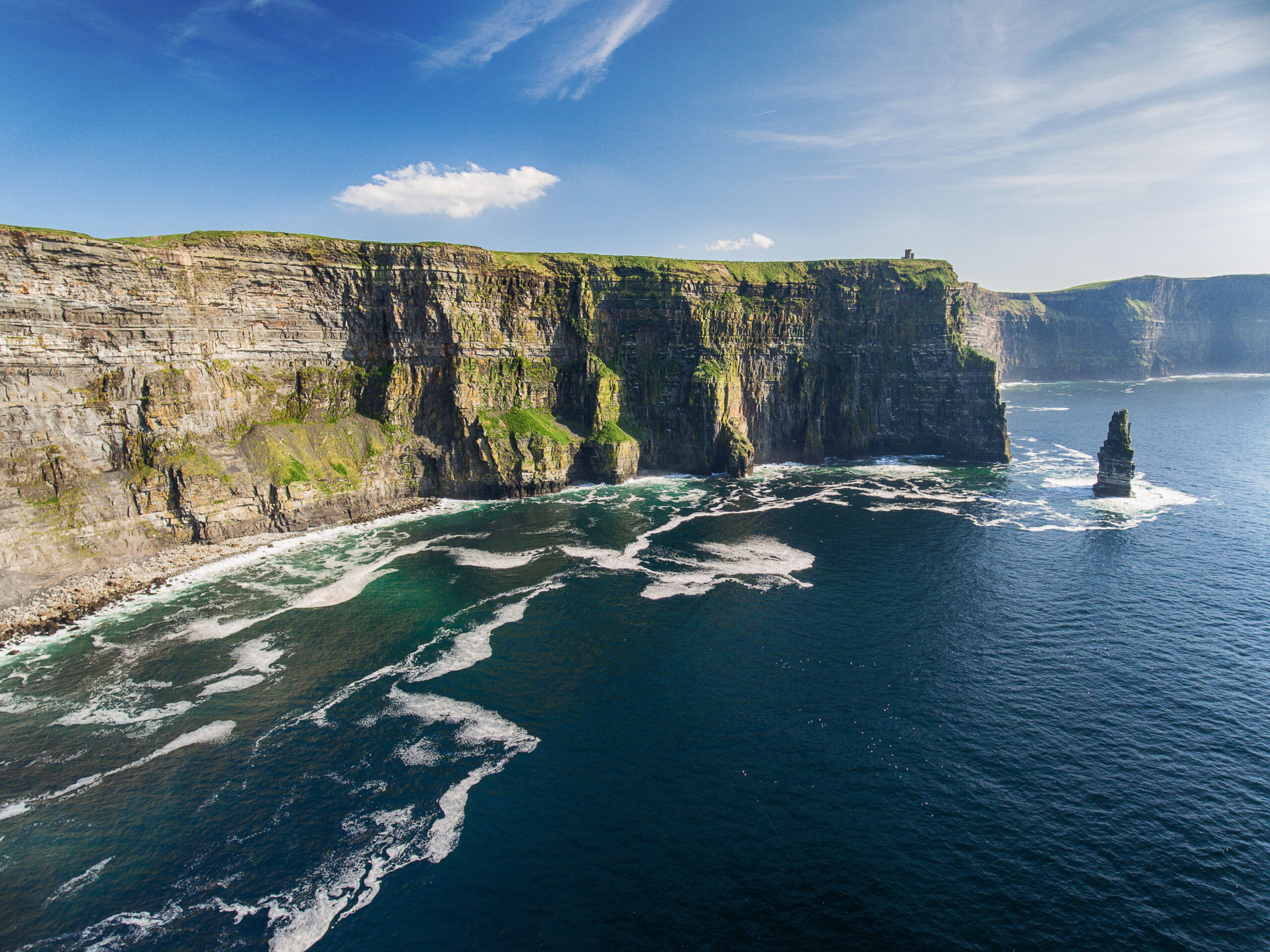
- The Cliffs of Moher
- Rathlin Island
- The Saltee Islands
Late spring and early summer are the best times to visit during the breeding season.
Birds of Prey
Birds of prey have made a strong recovery in Ireland following decades of conservation work. Species include:
- Peregrine falcons
- Buzzards
- Kestrels
- White-tailed sea eagles
The reintroduction of the white-tailed sea eagle stands as one of Ireland’s greatest conservation successes.
Wetland and Migratory Birds
Ireland’s wetlands and inland waterways attract thousands of wintering birds, including:
- Whooper swans
- Brent geese
- Curlews and other waders
- Ducks and wildfowl
Important wetland sites include Wexford Slobs, Shannon Callows, Lough Neagh, and the midlands lake systems.
Habitats and Landscapes That Support Wildlife
Ireland’s wildlife is closely linked to its varied habitats. Key ecosystems include:
- Atlantic coastline and offshore islands
- Peat bogs and wetlands
- Native woodlands
- Farmland and hedgerows
- Mountains and uplands
Hedgerows in particular act as wildlife corridors, supporting birds, insects, and small mammals across agricultural landscapes.
National Parks and Protected Areas
Ireland’s national parks and reserves play a vital role in wildlife conservation while remaining accessible to visitors.
Major national parks include:
- Killarney National Park
- Connemara National Park
- Glenveagh National Park
- Wicklow Mountains National Park
- Ballycroy National Park
These protected landscapes provide some of the best opportunities to observe wildlife responsibly.
Best Time of Year to Experience Wildlife in Ireland
Wildlife encounters vary by season:
- Spring: Breeding birds, returning migrants, fresh landscapes
- Summer: Seabird colonies, marine mammals, long daylight hours
- Autumn: Red deer rut, migrating birds, quieter locations
- Winter: Wetland birds and dramatic coastal wildlife viewing
Each season offers a different perspective on Ireland’s natural world.
Wildlife Photography in Ireland
Ireland’s soft light, changing weather, and varied landscapes make it an excellent destination for wildlife photography. Early mornings, overcast days, and coastal light often produce the best results.
Photographers are encouraged to prioritise ethical practices and avoid disturbing animals.
Responsible Wildlife Tourism in Ireland
Responsible travel is essential to protecting Ireland’s wildlife. Visitors should:
- Observe animals from a respectful distance
- Follow local guidelines and codes of conduct
- Support conservation-led tours and organisations
- Avoid disturbing breeding or resting wildlife
Thoughtful travel helps preserve Ireland’s biodiversity for future generations.
Frequently Asked Questions About Wildlife in Ireland
Is wildlife easy to see in Ireland?
Yes. With patience and good timing, wildlife encounters are common, particularly along the coast and in protected areas.
Are there dangerous animals in Ireland?
No. Ireland has no large predators, making wildlife observation safe and accessible.
Are guided wildlife tours worthwhile?
Yes. Guided tours can significantly enhance understanding and increase sighting opportunities.
Discovering Ireland’s Wildlife
Ireland’s wildlife is best experienced slowly and attentively. Whether watching seabirds above Atlantic cliffs, observing deer in ancient woodlands, or encountering dolphins offshore, these moments deepen a traveller’s connection to the island.
For travellers seeking nature, tranquillity, and authenticity, wildlife in Ireland offers a deeply enriching dimension to any journey—revealing an island that is alive with quiet complexity, seasonal rhythm, and enduring natural beauty.